Wine. Beyond the portrait

Catalog “Vino. Oltre il ritratto/Wine. Beyond the portrait”
Curated by: Luca Panaro
Photographs by: Nicola Biagetti, Greta Grasso, Paolo Munari Mandelli, Orecchie d’Asino, Bartolomeo Rossi
Size: 23x28cm
Pages: 64
Language: Italian and English
ISBN: 978-88-6448-196-8
Price: € 30.00
Publisher: Biblos Edizioni
Year: 2022

See EXHIBITION

See exhibition

The subject of photographs ceases to require a faithful mirror in portraiture. On the contrary, the subject decides to engage in performative micro-actions for the camera, as we can see in the works of the five artists from FMAV - Scuola di Alta Formazione. In some instances, the artists themselves become the focus of the images. In other cases, the subject is not human but imaginary. In all the photographs in the five projects, the scene documented has been created especially to be translated into an image. No person was photographed during their daily tasks at the winery, even where the Zenato employees were portrayed with their regular tools. Their participation and the settings created tend to elevate them to another level of signification.

Back

Wine. Beyond photography

Catalog “Vino. Oltre la fotografia/Wine. Beyond photography”
Curated by: Luca Panaro
Tutor: Marco Scozzaro
Photographs by: Kasey Baker, Xuhang Chen, Zheng Ma, Pumipat Usapratumban, Yu - Shan Sammi Wei
Size: 23x28cm
Pages: 64
Language: Italian and English
ISBN: 978-88-6448-214-9
Price: € 30.00
Publisher: Biblos Edizioni
Year: 2023

See EXHIBITION

See exhibition

Photography travels beyond its borders when it stops documenting the world. In other words, when it stops showing things the way they are in our daily reality. Photography moves past its boundaries when it accepts the fact that the outside world and our perception of it are the same thing. They exist on two different planes of communication and they are deeply different from one another.

There are no limits to the functions of the images in this show. But at the same time, the world of wine is never neglected. It remains the start and end point for the project. Kasey Baker focuses on the body. She uses it as a device to investigate the vegetation on the Zenato estate. She does through her performance piece and the use of embroidery created with a crochet needle. Pumipat Usapratumban uses an app that allows him to create 3D images of the casks used to ferment the grapes and the crates used to collect them. Using scans he made during the harvest, he builds digital landscapes. Xuhang Chen maps out a bottle of wine with graphic elements that remind the viewer of those used for three-dimensional modelling software. She contextually dismantles a vine leaf into 30 pieces. Yu Shan Wei works with short-circuit images. She shows a bottle next to tube that is used in wine production. She has photographed them from multiple angles where the object and its image generate a strange sort of mimesis. Zheng Ma has photographed wine glasses on a conveyor built used in the bottling process. As we look at the images, we realize that there is something strange. We start to see the individual pixels in the images in certain parts. We are already "beyond".

Back

Sole
Pioggia
Vento

Artist Book “Sole Pioggia Vento”
By Julia Carrillo
Curated by Luca Panaro
Layout: Francesco Voltolina
Format: 14,5 X 21 cm
Pages: 112
Language: Italiano e Inglese
ISBN: 9791281232136
Price: € 35.00
Publisher: a+mbookstore edizioni
Year: 2025

GO TO THE EXHIBITION

Vai all'exhibition

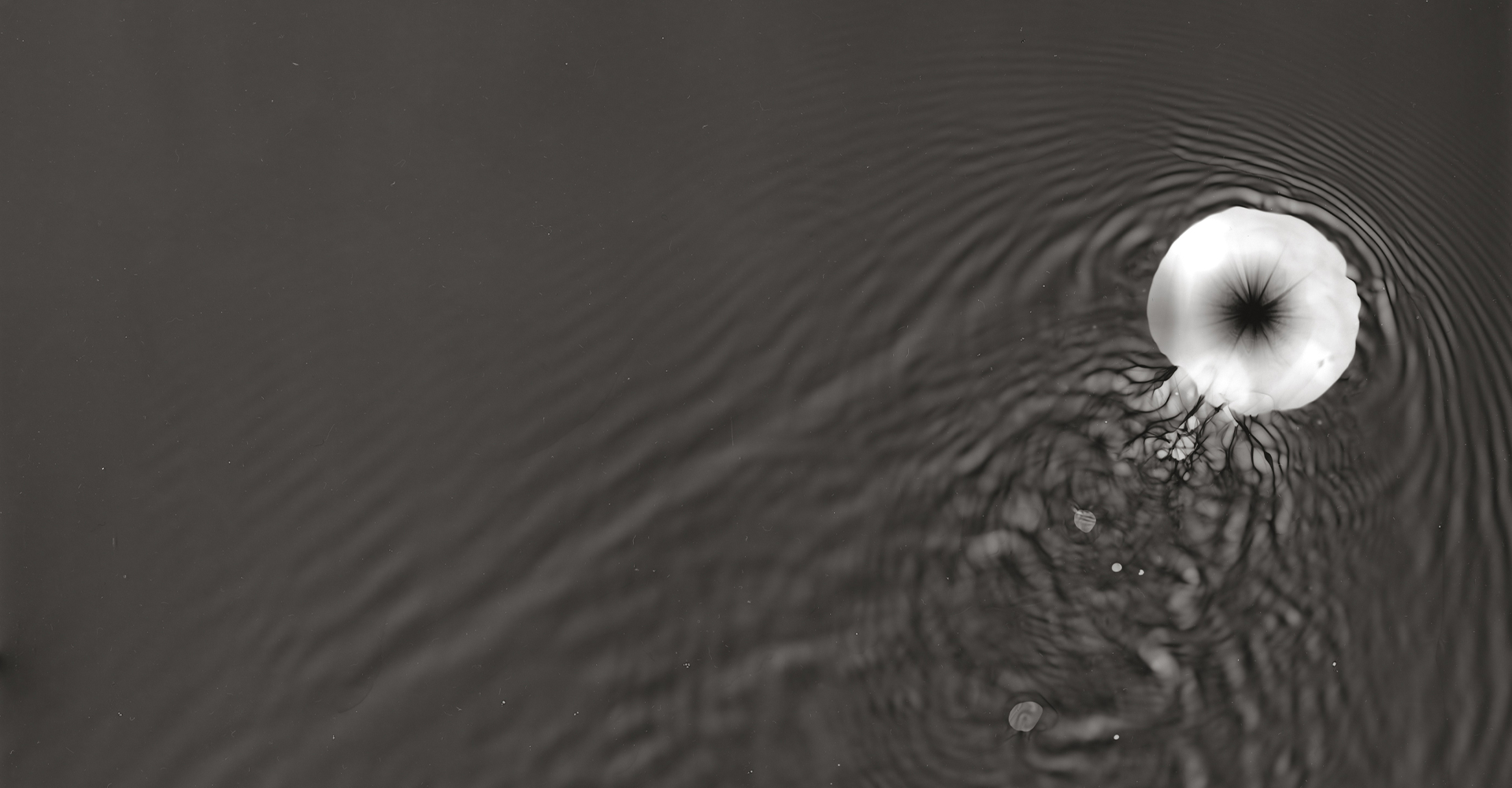
Julia Carrillo’s images were created using a darkroom, a technique that stretches back to the origins of photography. It allowed the artist to draw with light directly on photosensitive paper without the use of a conventional camera.

The project was born following the Mexican artist’s residency at the Zenato winery’s estates in Peschiera del Garda and Valpolicella.

Here Carrillo was able to observe work in the fields and in the winemaking facility during the harvest. But she was also able to delve into the importance of nature in the production process.

The vineyards were positioned using a deep understanding of the natural elements that create a sort of choreography between sun, rain, and wind.

At the same time, the artist’s images were produced using light, water, and air. In certain cases, she used direct sunlight. In others, she crafted rain and wind inside the camera obscura. The images are traces of the interaction between these elements and they translate into abstract shapes, free from interpretation.

The visual dynamism and the loss of recognizability in the subject are two defining elements of her approach to darkroom techniques.

During her work on the project, Carrillo also decided to use red wine as a filter for light. Along the way, she observed a substantial difference in the contrast in the images.

Back

Rosa Sentinella

Artist Book “Rosa Sentinella”
by Rachele Maistrello
Curated by: Luca Panaro
Layout: Francesco Voltolina, NSG
Size: 14,5 X 21 cm
Pages: 112
Languages: Italian and English
ISBN: 978-88-6448-225-5
Prices: € 30.00
Publisher: Biblos Edizioni - Zenato Academy
Year: 2024

Go to the exhibition

Vai all'exhibition

Rachele Maistrello’s cutouts are a means to rediscover the wonder of childhood. With the winery as their backdrop, they are surrounded by the winemaker’s tools.

Their purple color evokes the grapes that give life to the winery’s Amarone and Ripassa. They represent the values that the artist perceives in our vineyards. They have prompted her to see these places in a different light. As she positions the cardboard shapes in unexpected contexts, they create alienating images.

The shell evokes Lake Garda and the identity of the land where Lugana wines are produced: The vineyards are situated south of the lake, where melting glaciers created a unique terroir. The geometric fig-ures are an expression of the family’s love for their vineyards and their family traditions.

The jewels reflect the precious nature of our wines and the Zenato family’s calling to celebrate beauty and art. The laboratory is the ideal backdrop for the artist as she plays with the cutouts and makes her cardboard diamonds shine. The laboratory is a place where wine is studied, where alembics, scales, and computers stand ready to test, analyze, and ensure the quality of the final product. Here and there, a document appears between the images. There are spreadsheets and other barely dis-cernible shapes printed on light sheets papers.

The title of the project is a reference to the “rosa sentinella” or “sentinel rose.” In another era, a rose was planted at the beginning of the rows in the vineyards. When disease threatened the vines, symptoms would manifest first in the rose. The ac-tion of pruning alludes to a layered history that speaks of the relationship between man and nature. But it’s also a place where we can imagine a sort of dance.

Back

Maya

Artist Book “Maya”
by Rebecca Moccia
Edited by: Luca Panaro
Graphic design: Federico Barbon Studio, Francesco Voltolina
Size: 14,5 X 21 cm
Pages: 112
Languages: Italian and English
ISBN: 9791281232181
 
Publisher: a+mbookstore edizioni
Year of publication: 2024
Project developed in Autumn 2025

Go to the exhibition

Vai all'exhibition

Rebecca Moccia (Naples, 1992) works across different media, including photography, which she approaches in a way that departs from traditional practice. Rather than emphasizing the medium’s documentary or informative function, the artist focuses on its ability to create atmosphere and evoke emotional perception and stimulate critical reflection, establishing a subtle connection with the context she explores. For this reason, the images appear partially disturbed, at times blurred, as if the viewer were invited to challenge their own gaze and move visually through them in order to fully perceive them.

The body of work consists of photographs gathered in 2025 during Rebecca Moccia’s residency in Peschiera del Garda at the Zenato estates, produced by the artist or shared with her by workers, and interwoven with documentation from a visit to the Vetrobalsamo glassworks.

The artist focused on simple, functional images circulating via smartphones or captured fleetingly — images deeply marked by their digital nature and, precisely for this reason, strongly material, destined to age just like the wine maturing alongside them.

Within these images emerges an emotional and collective narrative of the material processes connected to labour and place, rather than a spectacular or celebratory account.

We then encounter illuminated pages drawn from ancient books on viticulture; elsewhere, drawings of winery equipment recount the tools and material culture of labour across the centuries. Also included are stills from the video Workers’ Sunshine, retracing the experience of those who head to the vineyards at dawn during the grape harvest — a moment that momentarily escapes pure productivity and is restored to a perceptual and collective dimension.

Back